Home
Login Register
Trendlines    Last:0.06    -0.001

Time to buy !

 Post Reply 381-400 of 1197
 
Tob231
    06-Nov-2025 19:27  
Contact    Quote!
i think need to lou a bit of air ... currently the balloon is filled up.
again we never know, they might continue to push it 
 
 
SmallSmall
    06-Nov-2025 13:55  
Contact    Quote!
Waiting for thew toto for this one.....
Be patient. The reward will be high.
They just need to convinve the funds the risks vs returns.
Don' t see why funds will not take up positions on this one if they are prepared to take one on IX Biopharm.
Boils on to risks vs returns I guess
 
 
Tob231
    06-Nov-2025 08:47  
Contact    Quote!
i do agree there is potential but the many indicators are saying otherwise .... could be a false start
beside the volume is low .... anyway it was a quick gain to hot 0.069 and came down to 0.061
all the best if you are vested .... imho


SmallSmall
    05-Nov-2025 15:39  
Contact    Quote!
All insiders (management and SS) all aligned for takeoff.
They have either gotten very good stock options (CEO) or have beefed up their stakes through recent placements.

The next time this couinter calls for a halt could be a sale for one of its startup. And it could be a jackpot as started in the article :)

SmallSmall      ( Date: 05-Nov-2025 14:24) Posted:


A reader contributed this article
 
I' ve been following Trendlines Group closely, and agree that the recent  interview  published in  The Edge Singapore  with CEO Haim Brosh and Head of Investor Relations Shira Zimmerman makes a compelling argument that Trendlines is worth very much more than even the recent re-rating of its shares.

The shares closed at  S$0.06  on October 28&mdash up sharply from S$0.03 in mid-2025 and slightly above the S$0.05 level in January&mdash and the company' s market cap has now climbed to about S$84 million (or US$65 million).

But there' s still a big gap between what the market values Trendlines and what it' s really worth.
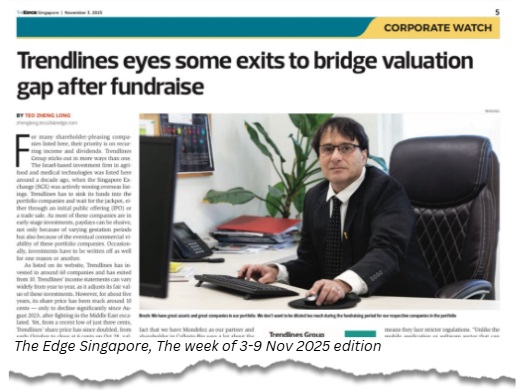
TheEdge11.25

Trendlines is a SGX-listed, Israel-headquartered powerhouse in agrifood and medtech investments with  a robust portfolio of 52 companies.

As Brosh explained, targeted exits and spin-offs are being pursued for unlocking value and sustaining growth.

Investors currently undervalue the portfolio' s fair value.

Trendlines gives a US$120.4 million valuation for its portfolio, using a non-IFRS figure.

It reflects only last investment round values (ie the implied valuations based on what investors paid for the portfolio companies' shares during placement exercises).

It' s the number  that only looks at the last cheques written, not what these companies could fetch tomorrow if sold.


Trendlines, known for nurturing early-stage innovations, acknowledges that  gestation periods for exits remain unpredictable, influenced by factors like commercial viability.

The firm recently did a S$8 million raise via a rights issue and private placement, in part to invest in the portfolio companies.

" We have great assets and great companies in our portfolio. We don' t want to be diluted too much during fundraising for our portfolio companies," Brosh told  The Edge.

This fresh capital enables Trendlines to maintain or strengthen stakes in promising ventures, especially as its portfolio firms seek their own funding.


Brosh mentioned  3-4 portfolio companies, without naming them, are ready for prime-time exits which, in my opinion, could possibly begin to take place within the next year.

These potential liquidity events are crucial to bridging the gap between the company' s intrinsic value and its market perception.
 
Big exit coming?
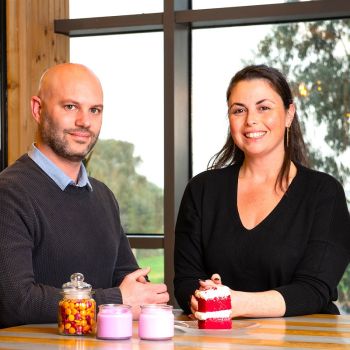
Phytolon cofounders


Phytolon co-founders: Dr Halim Jubran (CEO), Dr  Tal Zeltzer (Chief Technology Officer).

Fund-raising: 

&bull US$4.1 million  in Sept 2020 (seed funding)

&bull US$14.5 million  Series A in July 2022

&bull Additional funding  in Oct 2023


&bull   Investment  from Rich Products Ventures in Nov 2024


It' s befitting that the first portfolio company Haim highlighted in  The Edge  article is Phytolon, a plant-based colorants innovator where Trendlines holds a 20% stake.


As Brosh stated, Phytolon is set to not only redefine the world' s food dye industry but also dominate the space.

Phytolon aligns with surging demand for sustainable alternatives.

Compared to other plant-based natural alternatives, Phytolon  says  it offers higher efficiency: lower water usage by 95%, lower land use by 88%, and lower emissions by 90%.

" I will not quote the value of Phytolon as everyone can conduct their own evaluation and understand as well as I do," Brosh added.


A knowledgeable investor with substantial stakes in 3 listed companies and a growing stake in Trendlines suggested to me that there' s no logic Phytolon would be sold for less than the  US$940 million acquisition  of Oterra in 2021.

Not when we are confident that Phytolon will dominate the food dye industry versus the existing plant-based alternatives.

If that holds, Trendlines could reap over US$206 million from this alone&mdash dwarfing its current US$65 million market cap.

That&rsquo s 3X today&rsquo s entire market cap&mdash before we even touch the other 2-3 near-term potential exits!

 
Similarly, portfolio company Celleste-Bio' s recent breakthrough&mdash producing the world' s first plant cell-derived cocoa butter&mdash highlights untapped potential in the chocolate supply chain, a massive global industry.

Yet, Brosh tempered expectations, noting the technology, while revolutionary, requires time for commercial scaling.

" It' s a few years away... No doubt that the company is progressing well and possesses the ability to scale up, we prefer to wait for Celleste-Bio to become more mature before we look for an exit for them."


Brosh cryptically hinted at a " multiplication of returns" for investors with upcoming exits.

To my ears,
  that&rsquo s CEO-speak for &ldquo buckle up, this ride&rsquo s about to get fun.&rdquo


SmallSmall
    05-Nov-2025 14:24  
Contact    Quote!


A reader contributed this article
 
I' ve been following Trendlines Group closely, and agree that the recent  interview  published in  The Edge Singapore  with CEO Haim Brosh and Head of Investor Relations Shira Zimmerman makes a compelling argument that Trendlines is worth very much more than even the recent re-rating of its shares.

The shares closed at  S$0.06  on October 28&mdash up sharply from S$0.03 in mid-2025 and slightly above the S$0.05 level in January&mdash and the company' s market cap has now climbed to about S$84 million (or US$65 million).

But there' s still a big gap between what the market values Trendlines and what it' s really worth.

TheEdge11.25

Trendlines is a SGX-listed, Israel-headquartered powerhouse in agrifood and medtech investments with  a robust portfolio of 52 companies.

As Brosh explained, targeted exits and spin-offs are being pursued for unlocking value and sustaining growth.

Investors currently undervalue the portfolio' s fair value.

Trendlines gives a US$120.4 million valuation for its portfolio, using a non-IFRS figure.

It reflects only last investment round values (ie the implied valuations based on what investors paid for the portfolio companies' shares during placement exercises).

It' s the number  that only looks at the last cheques written, not what these companies could fetch tomorrow if sold.


Trendlines, known for nurturing early-stage innovations, acknowledges that  gestation periods for exits remain unpredictable, influenced by factors like commercial viability.

The firm recently did a S$8 million raise via a rights issue and private placement, in part to invest in the portfolio companies.

" We have great assets and great companies in our portfolio. We don' t want to be diluted too much during fundraising for our portfolio companies," Brosh told  The Edge.

This fresh capital enables Trendlines to maintain or strengthen stakes in promising ventures, especially as its portfolio firms seek their own funding.


Brosh mentioned  3-4 portfolio companies, without naming them, are ready for prime-time exits which, in my opinion, could possibly begin to take place within the next year.

These potential liquidity events are crucial to bridging the gap between the company' s intrinsic value and its market perception.

 
Big exit coming?
Phytolon cofounders


Phytolon co-founders: Dr Halim Jubran (CEO), Dr  Tal Zeltzer (Chief Technology Officer).

Fund-raising: 

&bull US$4.1 million  in Sept 2020 (seed funding)

&bull US$14.5 million  Series A in July 2022

&bull Additional funding  in Oct 2023


&bull   Investment  from Rich Products Ventures in Nov 2024


It' s befitting that the first portfolio company Haim highlighted in  The Edge  article is Phytolon, a plant-based colorants innovator where Trendlines holds a 20% stake.


As Brosh stated, Phytolon is set to not only redefine the world' s food dye industry but also dominate the space.

Phytolon aligns with surging demand for sustainable alternatives.

Compared to other plant-based natural alternatives, Phytolon  says  it offers higher efficiency: lower water usage by 95%, lower land use by 88%, and lower emissions by 90%.

" I will not quote the value of Phytolon as everyone can conduct their own evaluation and understand as well as I do," Brosh added.


A knowledgeable investor with substantial stakes in 3 listed companies and a growing stake in Trendlines suggested to me that there' s no logic Phytolon would be sold for less than the  US$940 million acquisition  of Oterra in 2021.

Not when we are confident that Phytolon will dominate the food dye industry versus the existing plant-based alternatives.

If that holds, Trendlines could reap over US$206 million from this alone&mdash dwarfing its current US$65 million market cap.

That&rsquo s 3X today&rsquo s entire market cap&mdash before we even touch the other 2-3 near-term potential exits!

 
Similarly, portfolio company Celleste-Bio' s recent breakthrough&mdash producing the world' s first plant cell-derived cocoa butter&mdash highlights untapped potential in the chocolate supply chain, a massive global industry.

Yet, Brosh tempered expectations, noting the technology, while revolutionary, requires time for commercial scaling.

" It' s a few years away... No doubt that the company is progressing well and possesses the ability to scale up, we prefer to wait for Celleste-Bio to become more mature before we look for an exit for them."


Brosh cryptically hinted at a " multiplication of returns" for investors with upcoming exits.

To my ears,
  that&rsquo s CEO-speak for &ldquo buckle up, this ride&rsquo s about to get fun.&rdquo
 
 
Tob231
    04-Nov-2025 14:41  
Contact    Quote!
I think so too, But currently the indicators are peakish ... this morning could be a false start to trapped some retail invetsors 
market is pretty unstable ... mostly hit and run


piscesmonkey
    04-Nov-2025 10:01  
Contact    Quote!
Should be back to 10cents soon
 
 
Tob231
    04-Nov-2025 09:44  
Contact    Quote!
i supposed so ... otherwise, it is going against the indicators that are showing red
 
 
piscesmonkey
    04-Nov-2025 09:26  
Contact    Quote!
 
 
easywin
    04-Nov-2025 08:55  
Contact    Quote!
Something special today?

PQTPQK      ( Date: 03-Nov-2025 20:50) Posted:

Gap up tomorrow?

SmallSmall      ( Date: 03-Nov-2025 19:05) Posted:

Trendlines eyes some exits to bridge valuation gap after fundraise

Teo Zheng LongMon, Nov 03, 2025  &bull   06:32 PM GMT+08  &bull     &bull   8  min read
 
' We are confident that the market will appreciate us and give us the valuation that we should be getting,' says Trendlines CEO Haim Brosh
 
For many shareholder-pleasing companies listed here, their priority is on recurring income and dividends. Trendlines Group sticks out in more ways than one. The Israel-based investment firm in agrifood and medical technologies was listed here around a decade ago, when the Singapore Exchange (SGX) was actively wooing overseas listings. Trendlines has to sink its funds into the portfolio companies and wait for the jackpot, either through an initial public offering (IPO) or a trade sale. As most of these companies are in early-stage investments, paydays can be elusive, not only because of varying gestation periods but also because of the eventual commercial viability of these portfolio companies. Occasionally, investments have to be written off as well for one reason or another.


As listed on its website, Trendlines has invested in around 60 companies and has exited from 10. Trendlines&rsquo income statements can vary widely from year to year, as it adjusts its fair value of these investments. However, for about five years, its share price has been stuck around 10 cents &mdash only to decline significantly since August 2023, after fighting in the Middle East escalated. Yet, from a recent low of just three cents, Trendlines&rsquo share price has since doubled, from early October to close at 6 cents on Oct 28, valuing the company at about $84 million.
Despite his company&rsquo s market value doubling, Trendlines CEO Haim Brosh believes his mission now is to bridge further the gap between what investors value his company and what he considers Trendlines&rsquo investments are worth.


In accordance with the International Financial Reporting Standards (IFRS), the book value as at Dec 31, 2024, was around US$67.3 million ($87 million). If a non-IFRS valuation is applied instead, the number should be US$120.4 million. &ldquo The reason for this big difference is due to the last transaction value of a start-up company versus what we put onto our books according to IFRS,&rdquo says Brosh in an interview with  The Edge Singapore.

Food dye, cocoa butter

Brosh, who was appointed CEO in 2023 after serving as CFO, is upbeat that several of the portfolio companies are ready for prime time. Phytolon, which focuses on a broad spectrum of healthy plant-based colours produced via fermentation technology, is set to redefine the global food dye industry, he claims. The catalyst is coming from the US, the world&rsquo s largest economy, as artificial food colouring is being phased out during food production and will soon be banned. &ldquo This is where the rest of the world will follow suit and Phytolon will stand to dominate the food dye industry,&rdquo says Brosh, adding that the global food dye industry is now worth around US$5 billion &mdash and growing.

&ldquo For Trendlines, we currently hold a 20% stake in Phytolon, and we cannot imagine how much our stake will be valued in the future. But, I will not quote the value of Phytolon or Trendlines&rsquo stake in the company as everyone can conduct their own evaluation and understand the potential for Phytolon,&rdquo he adds.

Another portfolio company flagged by Brosh is Celleste-Bio, described as an early-stage cocoa innovation company which recently achieved a breakthrough in sustainable cocoa production. Celleste-Bio, in which Trendlines holds more than 20%, recently produced the world&rsquo s first chocolate-grade cocoa butter using plant cell culture technology.
&ldquo I don&rsquo t think we need to emphasise the size of the chocolate market industry today. The fact that we have Mondelez as our partner and shareholder in Celleste-Bio says a lot about the prospect of the startup,&rdquo says Brosh, referring to the Nasdaq-listed giant in snacks manufacturing whose portfolio includes household chocolate brands such as Cadbury, Oreo and Toblerone.


According to Mondelez, no other company in the world can produce cocoa butter of the quality comparable to Celleste-Bio. However, he qualifies that an exit plan for Celleste-Bio is still premature, as commercial-scale production is a few years away. &ldquo No doubt that the company is progressing well and possesses the ability to scale up, we prefer to wait for Celleste-Bio to become more mature before we look towards an exit for them,&rdquo he says.

Another promising investment is in PregnanTech, which focuses on preventing preterm birth. &ldquo Preterm birth is one of the most expensive medical treatments in the world. The cost of having a preterm child during the first year and beyond is huge. At PregnanTech, we had a solution for this medical problem, and the application is simple and easy to use. Again, this is a huge market in the medical space, and we hold a significant stake in the company,&rdquo Brosh says.

Peace deal

Headlines out of Israel and the wider Middle East region over the last couple of years have been on the long-running conflict in Gaza. The international community has been trying to get the parties involved to do a peace deal. Brosh maintains that the war affects individuals on a personal level. However, he claims that, on a business level, over the last two years, there has been no significant impact on Trendlines or its portfolio companies.

He points out that some employees of the portfolio companies have been called back to service, but Trendlines helped fill the gaps. &ldquo From the investment perspective, despite a minor pullback from investors due to the conflict, the vast majority of the investors continue to invest in our portfolio companies, and these companies were able to raise money as a whole without much disruption.&rdquo

&ldquo The potential ceasefire, according to many articles out there, is expected to give a big boost to Israel&rsquo s start-up industry. In fact, the Israeli government plans to allocate more funds to support these companies. We are hopeful that the ceasefire will be able to create great things for the country, for the people and for Trendlines&rsquo portfolio as well,&rdquo Brosh explains.

Potential exits and spinoffs

For Trendlines&rsquo investors, they are, of course, looking for the next exit. According to Borsh, there are now three or four companies in a good position, but he prefers not to name any at this point to ensure that Trendlines can negotiate a good exit offer for these potential candidates.

Shira Zimmerman, in charge of investor relations and corporate communications at Trendlines, explains that, across the portfolio, things can change dramatically from time to time. &ldquo Sometimes it could achieve a breakthrough, or there could be an exit offer on the table for certain companies without prior notice. These surprises come along as well, and therefore we prefer not to list down the companies within the portfolio that could potentially head for the exit in the near term,&rdquo she says. Nonetheless, she points out that over the 10 years since Trendlines was listed on the SGX, many of its portfolio companies have matured significantly, making exit deals more viable than they were five or six years ago.

Zimmerman also points out that the nature of these portfolio companies&rsquo businesses often means they face stricter regulations. &ldquo Unlike the mobile application or software sector that can commercialise and grow its users exponentially within six months to a year, our portfolio companies in the medical and agrifood industry need some sort of regulatory approval from government bodies such as the US Food and Drug Administration (FDA). The timeline to exit, therefore, is significantly longer,&rdquo she says.

Investments and fundraising

To make further investments or to maintain its stakes in the portfolio companies as they raise new funding, Trendlines recently raised nearly $8 million from a rights issue and a private placement at 2.85 cents and 3 cents, respectively. &ldquo We need the money to invest either directly or indirectly into our portfolio companies. We have great assets and great companies in our portfolio. We don&rsquo t want to be diluted too much during the fundraising period for our respective companies in the portfolio,&rdquo says Brosh.

&ldquo Therefore, we need the money to invest in our portfolio companies. And if I had more money, I would invest more in them. This is the heart and soul of our business. We need to keep funding these companies, and when the exit time comes, everyone, including our shareholders, will be able to witness the multiplication in our returns,&rdquo Brosh explains.

Given the valuation gap between Trendlines&rsquo market capitalisation and its portfolio valuation, Brosh admits that Trendlines will have to prove to investors that it can score a big exit at the end of the day.

&ldquo Once we prove that, we are confident that the market will appreciate us and give us the valuation that we should be getting. We are putting more effort into investor relations work these days. We are speaking to various current or potential shareholders across different regions, such as Singapore, the US and Europe, to explain to them the real value in Trendlines,&rdquo he says.

&ldquo At the same time, we are listening to our shareholders as well. We do not ignore them and we take their feedback and comments seriously. One issue shareholders stressed was our operating costs, and we are proud to say we reduced them by 60% from 2022 to 2025. Therefore, by listening to our shareholders, we would like to gain their trust and that will bring value to us as well,&rdquo Brosh says.


PQTPQK
    03-Nov-2025 20:50  
Contact    Quote!
Gap up tomorrow?

SmallSmall      ( Date: 03-Nov-2025 19:05) Posted:

Trendlines eyes some exits to bridge valuation gap after fundraise

Teo Zheng LongMon, Nov 03, 2025  &bull   06:32 PM GMT+08  &bull     &bull   8  min read
 
' We are confident that the market will appreciate us and give us the valuation that we should be getting,' says Trendlines CEO Haim Brosh
 
For many shareholder-pleasing companies listed here, their priority is on recurring income and dividends. Trendlines Group sticks out in more ways than one. The Israel-based investment firm in agrifood and medical technologies was listed here around a decade ago, when the Singapore Exchange (SGX) was actively wooing overseas listings. Trendlines has to sink its funds into the portfolio companies and wait for the jackpot, either through an initial public offering (IPO) or a trade sale. As most of these companies are in early-stage investments, paydays can be elusive, not only because of varying gestation periods but also because of the eventual commercial viability of these portfolio companies. Occasionally, investments have to be written off as well for one reason or another.


As listed on its website, Trendlines has invested in around 60 companies and has exited from 10. Trendlines&rsquo income statements can vary widely from year to year, as it adjusts its fair value of these investments. However, for about five years, its share price has been stuck around 10 cents &mdash only to decline significantly since August 2023, after fighting in the Middle East escalated. Yet, from a recent low of just three cents, Trendlines&rsquo share price has since doubled, from early October to close at 6 cents on Oct 28, valuing the company at about $84 million.
Despite his company&rsquo s market value doubling, Trendlines CEO Haim Brosh believes his mission now is to bridge further the gap between what investors value his company and what he considers Trendlines&rsquo investments are worth.


In accordance with the International Financial Reporting Standards (IFRS), the book value as at Dec 31, 2024, was around US$67.3 million ($87 million). If a non-IFRS valuation is applied instead, the number should be US$120.4 million. &ldquo The reason for this big difference is due to the last transaction value of a start-up company versus what we put onto our books according to IFRS,&rdquo says Brosh in an interview with  The Edge Singapore.

Food dye, cocoa butter

Brosh, who was appointed CEO in 2023 after serving as CFO, is upbeat that several of the portfolio companies are ready for prime time. Phytolon, which focuses on a broad spectrum of healthy plant-based colours produced via fermentation technology, is set to redefine the global food dye industry, he claims. The catalyst is coming from the US, the world&rsquo s largest economy, as artificial food colouring is being phased out during food production and will soon be banned. &ldquo This is where the rest of the world will follow suit and Phytolon will stand to dominate the food dye industry,&rdquo says Brosh, adding that the global food dye industry is now worth around US$5 billion &mdash and growing.

&ldquo For Trendlines, we currently hold a 20% stake in Phytolon, and we cannot imagine how much our stake will be valued in the future. But, I will not quote the value of Phytolon or Trendlines&rsquo stake in the company as everyone can conduct their own evaluation and understand the potential for Phytolon,&rdquo he adds.

Another portfolio company flagged by Brosh is Celleste-Bio, described as an early-stage cocoa innovation company which recently achieved a breakthrough in sustainable cocoa production. Celleste-Bio, in which Trendlines holds more than 20%, recently produced the world&rsquo s first chocolate-grade cocoa butter using plant cell culture technology.
&ldquo I don&rsquo t think we need to emphasise the size of the chocolate market industry today. The fact that we have Mondelez as our partner and shareholder in Celleste-Bio says a lot about the prospect of the startup,&rdquo says Brosh, referring to the Nasdaq-listed giant in snacks manufacturing whose portfolio includes household chocolate brands such as Cadbury, Oreo and Toblerone.


According to Mondelez, no other company in the world can produce cocoa butter of the quality comparable to Celleste-Bio. However, he qualifies that an exit plan for Celleste-Bio is still premature, as commercial-scale production is a few years away. &ldquo No doubt that the company is progressing well and possesses the ability to scale up, we prefer to wait for Celleste-Bio to become more mature before we look towards an exit for them,&rdquo he says.

Another promising investment is in PregnanTech, which focuses on preventing preterm birth. &ldquo Preterm birth is one of the most expensive medical treatments in the world. The cost of having a preterm child during the first year and beyond is huge. At PregnanTech, we had a solution for this medical problem, and the application is simple and easy to use. Again, this is a huge market in the medical space, and we hold a significant stake in the company,&rdquo Brosh says.

Peace deal

Headlines out of Israel and the wider Middle East region over the last couple of years have been on the long-running conflict in Gaza. The international community has been trying to get the parties involved to do a peace deal. Brosh maintains that the war affects individuals on a personal level. However, he claims that, on a business level, over the last two years, there has been no significant impact on Trendlines or its portfolio companies.

He points out that some employees of the portfolio companies have been called back to service, but Trendlines helped fill the gaps. &ldquo From the investment perspective, despite a minor pullback from investors due to the conflict, the vast majority of the investors continue to invest in our portfolio companies, and these companies were able to raise money as a whole without much disruption.&rdquo

&ldquo The potential ceasefire, according to many articles out there, is expected to give a big boost to Israel&rsquo s start-up industry. In fact, the Israeli government plans to allocate more funds to support these companies. We are hopeful that the ceasefire will be able to create great things for the country, for the people and for Trendlines&rsquo portfolio as well,&rdquo Brosh explains.

Potential exits and spinoffs

For Trendlines&rsquo investors, they are, of course, looking for the next exit. According to Borsh, there are now three or four companies in a good position, but he prefers not to name any at this point to ensure that Trendlines can negotiate a good exit offer for these potential candidates.

Shira Zimmerman, in charge of investor relations and corporate communications at Trendlines, explains that, across the portfolio, things can change dramatically from time to time. &ldquo Sometimes it could achieve a breakthrough, or there could be an exit offer on the table for certain companies without prior notice. These surprises come along as well, and therefore we prefer not to list down the companies within the portfolio that could potentially head for the exit in the near term,&rdquo she says. Nonetheless, she points out that over the 10 years since Trendlines was listed on the SGX, many of its portfolio companies have matured significantly, making exit deals more viable than they were five or six years ago.

Zimmerman also points out that the nature of these portfolio companies&rsquo businesses often means they face stricter regulations. &ldquo Unlike the mobile application or software sector that can commercialise and grow its users exponentially within six months to a year, our portfolio companies in the medical and agrifood industry need some sort of regulatory approval from government bodies such as the US Food and Drug Administration (FDA). The timeline to exit, therefore, is significantly longer,&rdquo she says.

Investments and fundraising

To make further investments or to maintain its stakes in the portfolio companies as they raise new funding, Trendlines recently raised nearly $8 million from a rights issue and a private placement at 2.85 cents and 3 cents, respectively. &ldquo We need the money to invest either directly or indirectly into our portfolio companies. We have great assets and great companies in our portfolio. We don&rsquo t want to be diluted too much during the fundraising period for our respective companies in the portfolio,&rdquo says Brosh.

&ldquo Therefore, we need the money to invest in our portfolio companies. And if I had more money, I would invest more in them. This is the heart and soul of our business. We need to keep funding these companies, and when the exit time comes, everyone, including our shareholders, will be able to witness the multiplication in our returns,&rdquo Brosh explains.

Given the valuation gap between Trendlines&rsquo market capitalisation and its portfolio valuation, Brosh admits that Trendlines will have to prove to investors that it can score a big exit at the end of the day.

&ldquo Once we prove that, we are confident that the market will appreciate us and give us the valuation that we should be getting. We are putting more effort into investor relations work these days. We are speaking to various current or potential shareholders across different regions, such as Singapore, the US and Europe, to explain to them the real value in Trendlines,&rdquo he says.

&ldquo At the same time, we are listening to our shareholders as well. We do not ignore them and we take their feedback and comments seriously. One issue shareholders stressed was our operating costs, and we are proud to say we reduced them by 60% from 2022 to 2025. Therefore, by listening to our shareholders, we would like to gain their trust and that will bring value to us as well,&rdquo Brosh says.


SmallSmall
    03-Nov-2025 19:05  
Contact    Quote!

Trendlines eyes some exits to bridge valuation gap after fundraise

Teo Zheng LongMon, Nov 03, 2025  &bull   06:32 PM GMT+08  &bull     &bull   8  min read
 
' We are confident that the market will appreciate us and give us the valuation that we should be getting,' says Trendlines CEO Haim Brosh
 
For many shareholder-pleasing companies listed here, their priority is on recurring income and dividends. Trendlines Group sticks out in more ways than one. The Israel-based investment firm in agrifood and medical technologies was listed here around a decade ago, when the Singapore Exchange (SGX) was actively wooing overseas listings. Trendlines has to sink its funds into the portfolio companies and wait for the jackpot, either through an initial public offering (IPO) or a trade sale. As most of these companies are in early-stage investments, paydays can be elusive, not only because of varying gestation periods but also because of the eventual commercial viability of these portfolio companies. Occasionally, investments have to be written off as well for one reason or another.


As listed on its website, Trendlines has invested in around 60 companies and has exited from 10. Trendlines&rsquo income statements can vary widely from year to year, as it adjusts its fair value of these investments. However, for about five years, its share price has been stuck around 10 cents &mdash only to decline significantly since August 2023, after fighting in the Middle East escalated. Yet, from a recent low of just three cents, Trendlines&rsquo share price has since doubled, from early October to close at 6 cents on Oct 28, valuing the company at about $84 million.
Despite his company&rsquo s market value doubling, Trendlines CEO Haim Brosh believes his mission now is to bridge further the gap between what investors value his company and what he considers Trendlines&rsquo investments are worth.


In accordance with the International Financial Reporting Standards (IFRS), the book value as at Dec 31, 2024, was around US$67.3 million ($87 million). If a non-IFRS valuation is applied instead, the number should be US$120.4 million. &ldquo The reason for this big difference is due to the last transaction value of a start-up company versus what we put onto our books according to IFRS,&rdquo says Brosh in an interview with  The Edge Singapore.

Food dye, cocoa butter

Brosh, who was appointed CEO in 2023 after serving as CFO, is upbeat that several of the portfolio companies are ready for prime time. Phytolon, which focuses on a broad spectrum of healthy plant-based colours produced via fermentation technology, is set to redefine the global food dye industry, he claims. The catalyst is coming from the US, the world&rsquo s largest economy, as artificial food colouring is being phased out during food production and will soon be banned. &ldquo This is where the rest of the world will follow suit and Phytolon will stand to dominate the food dye industry,&rdquo says Brosh, adding that the global food dye industry is now worth around US$5 billion &mdash and growing.

&ldquo For Trendlines, we currently hold a 20% stake in Phytolon, and we cannot imagine how much our stake will be valued in the future. But, I will not quote the value of Phytolon or Trendlines&rsquo stake in the company as everyone can conduct their own evaluation and understand the potential for Phytolon,&rdquo he adds.

Another portfolio company flagged by Brosh is Celleste-Bio, described as an early-stage cocoa innovation company which recently achieved a breakthrough in sustainable cocoa production. Celleste-Bio, in which Trendlines holds more than 20%, recently produced the world&rsquo s first chocolate-grade cocoa butter using plant cell culture technology.
&ldquo I don&rsquo t think we need to emphasise the size of the chocolate market industry today. The fact that we have Mondelez as our partner and shareholder in Celleste-Bio says a lot about the prospect of the startup,&rdquo says Brosh, referring to the Nasdaq-listed giant in snacks manufacturing whose portfolio includes household chocolate brands such as Cadbury, Oreo and Toblerone.


According to Mondelez, no other company in the world can produce cocoa butter of the quality comparable to Celleste-Bio. However, he qualifies that an exit plan for Celleste-Bio is still premature, as commercial-scale production is a few years away. &ldquo No doubt that the company is progressing well and possesses the ability to scale up, we prefer to wait for Celleste-Bio to become more mature before we look towards an exit for them,&rdquo he says.

Another promising investment is in PregnanTech, which focuses on preventing preterm birth. &ldquo Preterm birth is one of the most expensive medical treatments in the world. The cost of having a preterm child during the first year and beyond is huge. At PregnanTech, we had a solution for this medical problem, and the application is simple and easy to use. Again, this is a huge market in the medical space, and we hold a significant stake in the company,&rdquo Brosh says.

Peace deal

Headlines out of Israel and the wider Middle East region over the last couple of years have been on the long-running conflict in Gaza. The international community has been trying to get the parties involved to do a peace deal. Brosh maintains that the war affects individuals on a personal level. However, he claims that, on a business level, over the last two years, there has been no significant impact on Trendlines or its portfolio companies.

He points out that some employees of the portfolio companies have been called back to service, but Trendlines helped fill the gaps. &ldquo From the investment perspective, despite a minor pullback from investors due to the conflict, the vast majority of the investors continue to invest in our portfolio companies, and these companies were able to raise money as a whole without much disruption.&rdquo

&ldquo The potential ceasefire, according to many articles out there, is expected to give a big boost to Israel&rsquo s start-up industry. In fact, the Israeli government plans to allocate more funds to support these companies. We are hopeful that the ceasefire will be able to create great things for the country, for the people and for Trendlines&rsquo portfolio as well,&rdquo Brosh explains.

Potential exits and spinoffs

For Trendlines&rsquo investors, they are, of course, looking for the next exit. According to Borsh, there are now three or four companies in a good position, but he prefers not to name any at this point to ensure that Trendlines can negotiate a good exit offer for these potential candidates.

Shira Zimmerman, in charge of investor relations and corporate communications at Trendlines, explains that, across the portfolio, things can change dramatically from time to time. &ldquo Sometimes it could achieve a breakthrough, or there could be an exit offer on the table for certain companies without prior notice. These surprises come along as well, and therefore we prefer not to list down the companies within the portfolio that could potentially head for the exit in the near term,&rdquo she says. Nonetheless, she points out that over the 10 years since Trendlines was listed on the SGX, many of its portfolio companies have matured significantly, making exit deals more viable than they were five or six years ago.

Zimmerman also points out that the nature of these portfolio companies&rsquo businesses often means they face stricter regulations. &ldquo Unlike the mobile application or software sector that can commercialise and grow its users exponentially within six months to a year, our portfolio companies in the medical and agrifood industry need some sort of regulatory approval from government bodies such as the US Food and Drug Administration (FDA). The timeline to exit, therefore, is significantly longer,&rdquo she says.

Investments and fundraising

To make further investments or to maintain its stakes in the portfolio companies as they raise new funding, Trendlines recently raised nearly $8 million from a rights issue and a private placement at 2.85 cents and 3 cents, respectively. &ldquo We need the money to invest either directly or indirectly into our portfolio companies. We have great assets and great companies in our portfolio. We don&rsquo t want to be diluted too much during the fundraising period for our respective companies in the portfolio,&rdquo says Brosh.

&ldquo Therefore, we need the money to invest in our portfolio companies. And if I had more money, I would invest more in them. This is the heart and soul of our business. We need to keep funding these companies, and when the exit time comes, everyone, including our shareholders, will be able to witness the multiplication in our returns,&rdquo Brosh explains.

Given the valuation gap between Trendlines&rsquo market capitalisation and its portfolio valuation, Brosh admits that Trendlines will have to prove to investors that it can score a big exit at the end of the day.

&ldquo Once we prove that, we are confident that the market will appreciate us and give us the valuation that we should be getting. We are putting more effort into investor relations work these days. We are speaking to various current or potential shareholders across different regions, such as Singapore, the US and Europe, to explain to them the real value in Trendlines,&rdquo he says.

&ldquo At the same time, we are listening to our shareholders as well. We do not ignore them and we take their feedback and comments seriously. One issue shareholders stressed was our operating costs, and we are proud to say we reduced them by 60% from 2022 to 2025. Therefore, by listening to our shareholders, we would like to gain their trust and that will bring value to us as well,&rdquo Brosh says.
 
 
SmallSmall
    03-Nov-2025 17:58  
Contact    Quote!
Buy this to hold.
It is likely to be a multi bagger even though it has doubled.
​ Smart monies appears to be accumulating the stock


PQTPQK
    29-Oct-2025 20:38  
Contact    Quote!
Hope will test 0.07 tomorrow

Battle123      ( Date: 29-Oct-2025 20:21) Posted:

if go down, like to add onz


Battle123
    29-Oct-2025 20:21  
Contact    Quote!
if go down, like to add onz


PQTPQK
    29-Oct-2025 11:21  
Contact    Quote!
time to move....?
 
 
Battle123
    28-Oct-2025 21:53  
Contact    Quote!
veri gd performance tdy

anymore ?
 
 
eric998
    28-Oct-2025 16:36  
Contact    Quote!
BBs support 59, if breached, then go back to square 1. Trade with care.

Taylor      ( Date: 28-Oct-2025 16:18) Posted:

Alert short team is backed by use p


Taylor
    28-Oct-2025 16:18  
Contact    Quote!
Alert short team is backed by use p
 
 
eric998
    28-Oct-2025 15:56  
Contact    Quote!
Shorting started?

PQTPQK      ( Date: 28-Oct-2025 15:50) Posted:

very strong today

tofudidi      ( Date: 28-Oct-2025 15:49) Posted:

more show coming.... short squeeze towards 7 series


Important: Please read our Terms and Conditions and Privacy Policy .