

 Post Reply
1501-1520 of 2201
Post Reply
1501-1520 of 2201
us' s debt no ceiling it is infinite so need to mix with many times of us rate hikes
Yellen&rsquo s comments, delivered at a press conference in Bengaluru, India, where finance ministers and central bank governors from the Group of 20 countries are gathering Feb 22-25, highlight a shift in tone on the global economic outlook from the last time the world&rsquo s top policymakers met in October.
&ldquo The challenges we face are real, and the future is always uncertain. But the outlook has improved since we gathered in the fall,&rdquo Yellen said.
Her comments come just a few weeks after the International Monetary Fund said it saw a &ldquo turning point&rdquo for the global economy and raised its growth outlook for the first time in a year.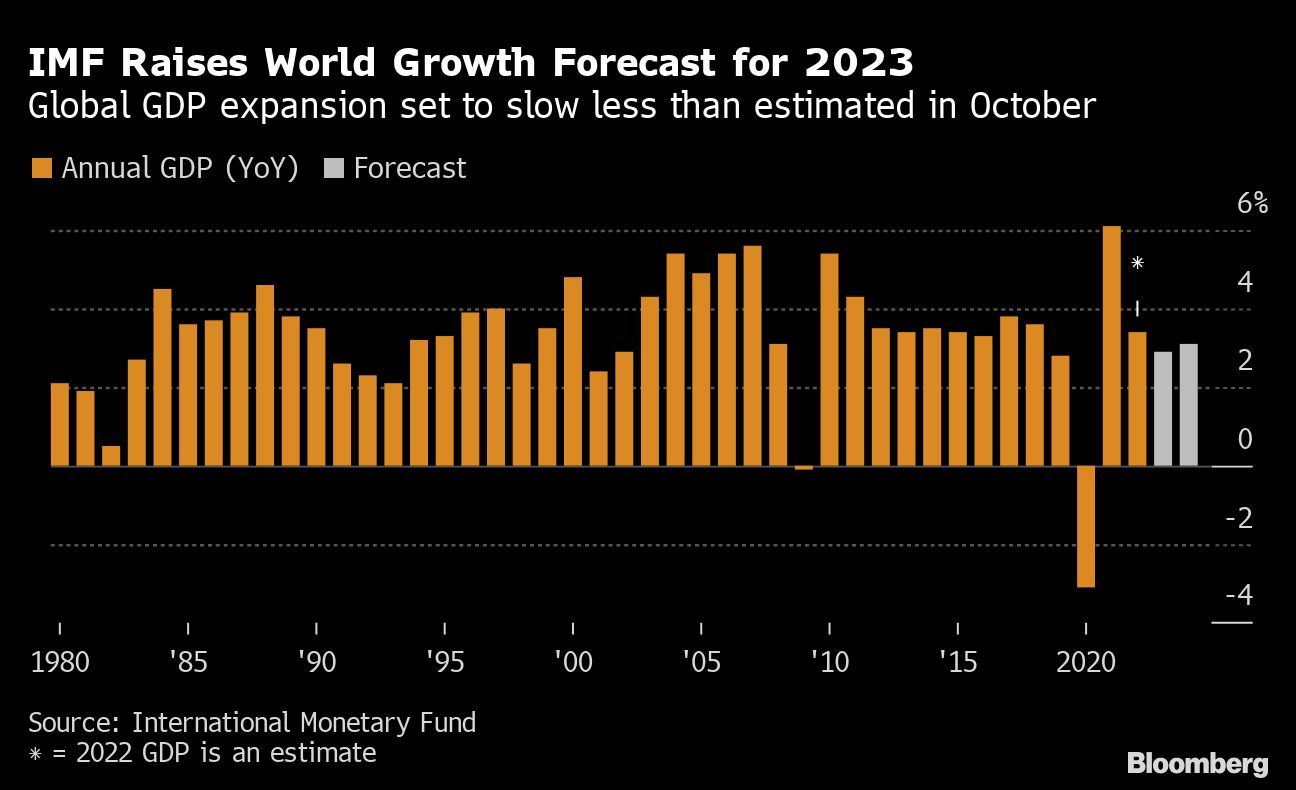 At home, Yellen pointed to a resilient US economy, where headline inflation has moderated over the past few months and the labour market remains strong.
On the global front, she stressed the importance of being attentive to &ldquo the spillovers of macroeconomic tightening&rdquo from major economies to the rest of the world. Yellen noted signs of declining headline inflation across the globe, but stressed &ldquo there&rsquo s much more work to do&rdquo .
The US has provided over US$46 billion in security, economic and humanitarian assistance to Ukraine and expects to provide around US$10 billion in additional economic support over the coming months, Yellen said. Financial aid, used to support critical public services and help keep the government running, is one of several ways in which the US and its allies are helping Ukraine.
She also called for the IMF to move swiftly toward a fully-financed programme for Ukraine, and said that continued, robust support for Ukraine will be a major topic of discussion during her time in India.
&ldquo Our twin goals are to degrade Russia&rsquo s military-industrial complex and reduce the revenues that it can use to fund its war,&rdquo she said.
Yellen&rsquo s spotlight on the war in Ukraine is at odds with G-20 host India&rsquo s efforts to downplay the conflict during the group&rsquo s deliberations. Indian officials guiding the event are going so far as to seek avoiding the word &ldquo war&rdquo in any joint statement that concludes the meetings.
The US Secretary also cautioned against countries that help Russia evade sanctions, saying the administration would continue to make clear to the Chinese government and to companies and banks in their jurisdiction about what the rules are regarding such sanctions and the serious consequences they would face for violating them.
&ldquo We have made clear that providing material support to Russia or assistance with any type of systemic sanctions evasion would be a very serious concern to us,&rdquo Yellen said.
The US Treasury Secretary stresses the importance of being attentive to &ldquo the spillovers of macroeconomic tightening&rdquo from major economies to the rest of the world.(Feb 23): The global economy is in a better place today than many predicted months ago, US Treasury Secretary Janet Yellen said Thursday, while reiterating her calls for support to Ukraine on the eve of the one-year anniversary of Russia&rsquo s invasion.
Yellen&rsquo s comments, delivered at a press conference in Bengaluru, India, where finance ministers and central bank governors from the Group of 20 countries are gathering Feb 22-25, highlight a shift in tone on the global economic outlook from the last time the world&rsquo s top policymakers met in October.
&ldquo The challenges we face are real, and the future is always uncertain. But the outlook has improved since we gathered in the fall,&rdquo Yellen said.
Her comments come just a few weeks after the International Monetary Fund said it saw a &ldquo turning point&rdquo for the global economy and raised its growth outlook for the first time in a year.
On the global front, she stressed the importance of being attentive to &ldquo the spillovers of macroeconomic tightening&rdquo from major economies to the rest of the world. Yellen noted signs of declining headline inflation across the globe, but stressed &ldquo there&rsquo s much more work to do&rdquo .
Ukraine aid
Speaking a day before the one-year anniversary of Russia&rsquo s invasion of Ukraine, Yellen also reiterated the US administration&rsquo s readiness to continue sending billions of dollars in aid for the Eastern European country as it battles Russian aggression and missile attacks.The US has provided over US$46 billion in security, economic and humanitarian assistance to Ukraine and expects to provide around US$10 billion in additional economic support over the coming months, Yellen said. Financial aid, used to support critical public services and help keep the government running, is one of several ways in which the US and its allies are helping Ukraine.
She also called for the IMF to move swiftly toward a fully-financed programme for Ukraine, and said that continued, robust support for Ukraine will be a major topic of discussion during her time in India.
&ldquo Our twin goals are to degrade Russia&rsquo s military-industrial complex and reduce the revenues that it can use to fund its war,&rdquo she said.
Yellen&rsquo s spotlight on the war in Ukraine is at odds with G-20 host India&rsquo s efforts to downplay the conflict during the group&rsquo s deliberations. Indian officials guiding the event are going so far as to seek avoiding the word &ldquo war&rdquo in any joint statement that concludes the meetings.
The US Secretary also cautioned against countries that help Russia evade sanctions, saying the administration would continue to make clear to the Chinese government and to companies and banks in their jurisdiction about what the rules are regarding such sanctions and the serious consequences they would face for violating them.
&ldquo We have made clear that providing material support to Russia or assistance with any type of systemic sanctions evasion would be a very serious concern to us,&rdquo Yellen said.
chartistkao1 ( Date: 22-Feb-2023 15:16) Posted:
|
angmos greatest netflix' s drama I am running out of money soon!
https://www.axios.com/2023/01/17/debt-ceiling-yellen-congress
https://www.axios.com/2023/01/17/debt-ceiling-yellen-congress
chartistkao1 ( Date: 10-Feb-2023 15:07) Posted:
|
botak junior can take the same method to gain control of the bank in next few years of us selldown
https://www.businesstimes.com.sg/companies-markets/wee-cho-yaw-tightens-grip-property-assets-uols-marina-centre-deal
https://www.businesstimes.com.sg/companies-markets/wee-cho-yaw-tightens-grip-property-assets-uols-marina-centre-deal
chartistkao1 ( Date: 10-Feb-2023 14:48) Posted:
|
hard to recover from the feb high in 2023 liao
 Wee Ee Cheong, chief executive officer of United Overseas Bank (UOB), attends a news conference in ... [+]
Ore Huiying/Bloomberg
Shares of United Overseas Bank&mdash controlled by Singaporean billionaire Wee Cho Yaw&mdash climbed to a record high amid growing optimism the recently announced acquisition of Citibank&rsquo s consumer banking business across Indonesia, Malaysia, Thailand and Vietnam will transform the Singapore-based lender into a regional powerhouse.
Daiwa Capital Markets dubbed the transaction &ldquo game-changing&rdquo in its research note published after the deal was announced on January 14. UOB agreed to pay Citibank about S$4.9 billion ($3.6 billion), which includes a premium of S$915 million on top of the business&rsquo aggregate net asset value of S$4 billion as of June last year. Since that day, UOB shares had risen about 12%, touching a record intraday high of S$32.86, before closing at an all-time high of S$32.65 in Singapore.
&ldquo Acquiring the Citi businesses in markets that UOB already understands well is consistent with its retail strategy and will also provide attractive scale,&rdquo Daiwa analyst David Lum wrote in his research note last month.
&ldquo The acquired business, together with UOB&rsquo s regional consumer franchise, will form a powerful combination that will scale up UOB Group&rsquo s business and advance our position as a leading regional bank,&rdquo UOB deputy chairman and CEO Wee Ee Cheong said in a statement as he announced the acquisition last month. Ee Cheong is the eldest son of banking and real estate tycoon Wee Cho Yaw, who is currently the bank&rsquo s chairman emeritus after stepping down in 2013.
UOB, Singapore&rsquo s third-largest lender by assets, was cofounded in 1935 by Wee Cho Yaw&rsquo s father Wee Khiang Cheng as United Chinese Bank. Apart from his controlling interest in the bank, Wee, 93, holds significant stakes in real estate companies including UOL Group and Kheng Leong. With a net worth of $6.8 billion, he was ranked No. 9 on the list of Singapore&rsquo s 50 Richest that was published in August. His net worth has since risen to $7.8 billion currently, according to Forbes&rsquo real-time data.
Billionaire Wee Cho Yaw&rsquo s UOB Rises To Record High Amid Optimism Over `Game-Changing&rsquo Citibank Deal
Jonathan Burgos
Forbes Staff
Feb 8, 2022,03:45am EST
Ore Huiying/Bloomberg
Shares of United Overseas Bank&mdash controlled by Singaporean billionaire Wee Cho Yaw&mdash climbed to a record high amid growing optimism the recently announced acquisition of Citibank&rsquo s consumer banking business across Indonesia, Malaysia, Thailand and Vietnam will transform the Singapore-based lender into a regional powerhouse.
PROMOTED
The acquisition&mdash which doubles UOB&rsquo s customer base to 5.3 million across the region&mdash will be immediately earnings accretive, UOB said. The Citigroup regional business generated income of about S$500 million in the first half of 2021. Depending on regulatory approvals, the transaction is expected t be progressively completed from mid-2022 through early 2024.
MORE FROMFORBES ADVISOR
chartistkao1 ( Date: 10-Feb-2023 14:40) Posted:
|
when they can not sink china ship in 2015 and oct 2022, they sinked their own ship in 2023
https://www.goldmansachs.com/insights/pages/a-deal-on-the-debt-ceiling-is-likely-but-not-without-uncertainty.html
https://www.goldmansachs.com/insights/pages/a-deal-on-the-debt-ceiling-is-likely-but-not-without-uncertainty.html
chartistkao1 ( Date: 10-Feb-2023 14:37) Posted:
|
the angmos kia intention is not to abndon the ship to foreign ships they want to sink the global ship as they can not solve the looming issues
https://edition.cnn.com/2023/01/25/investing/premarket-stocks-trading/index.html
https://edition.cnn.com/2023/01/25/investing/premarket-stocks-trading/index.html
chartistkao1 ( Date: 10-Feb-2023 14:31) Posted:
|
the angmos kia wants the global markets to nosedive so inflation can go down to 2% by 2024

.S. Hits Debt Ceiling: Will It Impact Investors?
January 19, 2023 Michael Townsend
Fear that the federal government may default on its obligations has driven market volatility in the past, but typically not until the default deadline is much closer.
The United States hit the debt ceiling on January 19th, launching what could be the most consequential policy debate of 2023 for the markets. Although the crisis is still likely five to six months away, concern about when and whether a deeply divided Congress will be able to find a path to raising the debt ceiling will be a critical issue for investors to monitor.
The previous Congress raised the debt ceiling&mdash the cap mandated by Congress on the total amount of debt the United States can accumulate&mdash to $31.381 trillion in December 2021. In a January 13th letter to Congress, Treasury Secretary Janet Yellen said that the U.S. would hit that limit on January 19th and that the department would begin employing " extraordinary measures" to help delay the point at which the nation might default on its obligations.
Extraordinary measures, which Treasury has employed more than a dozen times in debt ceiling battles dating back to the mid-1990s, include steps like suspending new investments in various retirement plans for government employees. The retirement plans would be made whole again once the debt ceiling was resolved.
Those steps will buy Congress time&mdash but it' s not yet clear exactly how much time. In her letter, Yellen said that " it is unlikely that cash and extraordinary measures will be exhausted before early June," her first expression of the timing of a potential default if Congress does not raise or suspend the debt ceiling before then. Third-party analyses have indicated that the extraordinary measures could last until late June or early July. But Yellen emphasized that there is " considerable uncertainty" about the timing. Numerous factors can impact the default date, including tax receipts this spring, rising interest rates, the president' s suspension of student loan repayments and many others.
While the exact deadline remains unknown, the clock has officially begun ticking toward a potential default this summer. Now the pressure is on a deeply divided Congress to act&mdash and early signs indicate that will not be easy.
The previous Congress raised the debt ceiling&mdash the cap mandated by Congress on the total amount of debt the United States can accumulate&mdash to $31.381 trillion in December 2021. In a January 13th letter to Congress, Treasury Secretary Janet Yellen said that the U.S. would hit that limit on January 19th and that the department would begin employing " extraordinary measures" to help delay the point at which the nation might default on its obligations.
Extraordinary measures, which Treasury has employed more than a dozen times in debt ceiling battles dating back to the mid-1990s, include steps like suspending new investments in various retirement plans for government employees. The retirement plans would be made whole again once the debt ceiling was resolved.
Those steps will buy Congress time&mdash but it' s not yet clear exactly how much time. In her letter, Yellen said that " it is unlikely that cash and extraordinary measures will be exhausted before early June," her first expression of the timing of a potential default if Congress does not raise or suspend the debt ceiling before then. Third-party analyses have indicated that the extraordinary measures could last until late June or early July. But Yellen emphasized that there is " considerable uncertainty" about the timing. Numerous factors can impact the default date, including tax receipts this spring, rising interest rates, the president' s suspension of student loan repayments and many others.
While the exact deadline remains unknown, the clock has officially begun ticking toward a potential default this summer. Now the pressure is on a deeply divided Congress to act&mdash and early signs indicate that will not be easy.
Echoes of 2011
Debt ceiling battles are nothing new on Capitol Hill: Congress has raised the limit more 75 times since 1960. But over the past two decades, what was once a routine vote has become one of the most politically contentious issues that Congress faces.
Lawmakers have sometimes raised the debt limit to a specific dollar amount, as happened in December 2021. But lawmakers have also simply suspended the debt ceiling for a specific period of time. Either way, the effect is to allow the country to continue to accumulate debt while kicking the difficult debate down the road for a year or more at a time.
The closest the United States has ever come to defaulting was in the summer of 2011. Markets were roiled as uncertainty about when Congress would raise the ceiling continued through the summer. The S& P 500 fell by more than 16% in just over five weeks in July and early August of that year. Standard & Poor' s downgraded the U.S. credit rating for the first time ever. Congress eventually reached a compromise in early August 2011, raising the debt limit just days before the country would have defaulted.
The 2011 debt situation is illustrative because the political configuration in Washington was exactly the same as we have today: a Democrat in the White House, Democrats holding a slim majority in the Senate and Republicans holding the majority in the House of Representatives.
But the Congress in 2023 is arguably even more polarized than it was 12 years ago. Already, the contours of the standoff are taking shape. Republicans are saying that they won' t agree to a debt limit increase unless it is paired with spending cuts. Democrats, including the White House, say that they will only support a " clean" debt limit increase, with no strings attached.
Those conflicting positions have been at the heart of previous debt ceiling debates&mdash and each of those battles ended with Congress raising or suspending the debt ceiling in time to avoid default. And the fact that there is interest on both sides of the aisle in having discussions about a resolution several months ahead of the default deadline this year could be a positive sign.
The drama will play out over the next several months, with the Republican-controlled House likely to push through a debt ceiling increase that includes significant government spending cuts. Such an approach is unlikely to be considered in the Democrat-controlled Senate. The two parties will then have to negotiate a solution.
There is an alternative approach by which a handful of House Republicans could join with all or most of the 212 House Democrats to force a vote on a different debt ceiling approach. The process, known as a " discharge petition," is a cumbersome and time-consuming one, but one that could offer an escape route if talks bog down this spring. Expect a lot of back and forth between the two parties over the next few months before such an approach would be considered.
Lawmakers have sometimes raised the debt limit to a specific dollar amount, as happened in December 2021. But lawmakers have also simply suspended the debt ceiling for a specific period of time. Either way, the effect is to allow the country to continue to accumulate debt while kicking the difficult debate down the road for a year or more at a time.
The closest the United States has ever come to defaulting was in the summer of 2011. Markets were roiled as uncertainty about when Congress would raise the ceiling continued through the summer. The S& P 500 fell by more than 16% in just over five weeks in July and early August of that year. Standard & Poor' s downgraded the U.S. credit rating for the first time ever. Congress eventually reached a compromise in early August 2011, raising the debt limit just days before the country would have defaulted.
The 2011 debt situation is illustrative because the political configuration in Washington was exactly the same as we have today: a Democrat in the White House, Democrats holding a slim majority in the Senate and Republicans holding the majority in the House of Representatives.
But the Congress in 2023 is arguably even more polarized than it was 12 years ago. Already, the contours of the standoff are taking shape. Republicans are saying that they won' t agree to a debt limit increase unless it is paired with spending cuts. Democrats, including the White House, say that they will only support a " clean" debt limit increase, with no strings attached.
Those conflicting positions have been at the heart of previous debt ceiling debates&mdash and each of those battles ended with Congress raising or suspending the debt ceiling in time to avoid default. And the fact that there is interest on both sides of the aisle in having discussions about a resolution several months ahead of the default deadline this year could be a positive sign.
The drama will play out over the next several months, with the Republican-controlled House likely to push through a debt ceiling increase that includes significant government spending cuts. Such an approach is unlikely to be considered in the Democrat-controlled Senate. The two parties will then have to negotiate a solution.
There is an alternative approach by which a handful of House Republicans could join with all or most of the 212 House Democrats to force a vote on a different debt ceiling approach. The process, known as a " discharge petition," is a cumbersome and time-consuming one, but one that could offer an escape route if talks bog down this spring. Expect a lot of back and forth between the two parties over the next few months before such an approach would be considered.
Potential impact on the markets
While today' s headlines are full of news about the debt ceiling and the start of Treasury' s extraordinary measures, the stock market historically has not reacted until the default deadline is much closer. In 2011, the market downturn started about a month before the deadline and accelerated as the deadline approached. Market volatility spiked as the deadline drew closer. By all estimates, we are still five to six months away from the crisis point, so market reaction is expected to remain muted in the coming weeks.
In the bond market, Treasury bills with maturities in mid to late summer are starting to see a premium in their yields that may reflect anxiety about the timing of a debt ceiling resolution. In previous debt ceiling episodes, short-term Treasury bills and risk assets declined as the drama unfolded, then rebounded once an agreement was reached.
While the path to a resolution is uncertain, we continue to believe that the United States will not default. A default would be an unprecedented event that would likely have dramatic and unpredictable repercussions in the global financial markets. But it has never happened&mdash Congress has always managed to find a way to reach an agreement.
Importantly, the debt ceiling situation is only one factor among many that is likely to impact the markets in the months ahead. Investors continue to focus on economic, jobs and inflation data, as well as the Federal Reserve' s interest-rate strategy, all of which are likely to have a much larger effect on investor sentiment in the next few months than the looming debt ceiling drama
In the bond market, Treasury bills with maturities in mid to late summer are starting to see a premium in their yields that may reflect anxiety about the timing of a debt ceiling resolution. In previous debt ceiling episodes, short-term Treasury bills and risk assets declined as the drama unfolded, then rebounded once an agreement was reached.
While the path to a resolution is uncertain, we continue to believe that the United States will not default. A default would be an unprecedented event that would likely have dramatic and unpredictable repercussions in the global financial markets. But it has never happened&mdash Congress has always managed to find a way to reach an agreement.
Importantly, the debt ceiling situation is only one factor among many that is likely to impact the markets in the months ahead. Investors continue to focus on economic, jobs and inflation data, as well as the Federal Reserve' s interest-rate strategy, all of which are likely to have a much larger effect on investor sentiment in the next few months than the looming debt ceiling drama
chartistkao1 ( Date: 10-Feb-2023 13:39) Posted:
|
https://cloud.tencent.com/developer/article/2192115
chartistkao1 ( Date: 06-Feb-2023 15:48) Posted:
|
https://stock.finance.sina.com.cn/stock/go.php/vReport_Show/kind/industry/rptid/729000533998/index.phtml
chartistkao1 ( Date: 06-Feb-2023 15:37) Posted:
|
这 是 一 个 创 新 年 代

中 国 ChatGPT&rdquo 引 爆 百 度 股 价 , 百 度 获 资 本 市 场 价 值 重 估
&ldquo 中 国 ChatGPT&rdquo 引 爆 百 度 股 价 , 百 度 获 资 本 市 场 价 值 重 估
百 度 不 出 意 外 地 涨 了 。 从 几 日 前 外 媒 曝 出 百 度 即 将 发 布 中 国 ChatGPT起 , 百 度 股 价 就 隐 有 爆 发 趋 势 , 昨 晚 百 度 股 价 迎 来 极 速 拉 升 , 涨 幅 一 度 逼 近 15%, 带 动 中 概 股 大 盘 走 高 。
消 息 面 上 , 刺 激 百 度 此 次 大 涨 的 是 多 家 机 构 的 看 多 态 度 。 资 管 巨 头 贝 莱 德 近 期 披 露 其 持 股 百 度 的 比 例 提 高 ; 美 国 投 行 麦 格 理 也 报 告 称 , 将 百 度 今 明 年 经 调 整 每 股 盈 测 上 调 13% /4% 。 并 且 , 麦 格 理 特 别 表 明 了 对 &ldquo 中 国 ChatGPT&rdquo 的 看 好 , 称 百 度 &ldquo 可 见 的 上 行 惊 喜 将 会 是 公 司 有 机 会 在 中 国 推 出 类 似 ChatGPT的 人 工 智 能 ( AI) 聊 天 机 器 人 &rdquo , 再 次 拉 高 了 市 场 对 中 国 ChatGPT的 期 待 。
资 本 市 场 向 来 用 脚 投 票 , 从 百 度 大 涨 与 机 构 看 多 的 消 息 中 , 可 以 推 敲 出 资 本 市 场 的 两 点 态 度 。 第 一 , 虽 然 百 度 仍 未 对 &ldquo 国 产 ChatGPT&rdquo 有 任 何 官 方 回 应 , 但 投 资 者 们 更 倾 向 于 相 信 这 一 消 息 , 这 表 明 投 资 者 们 认 可 百 度 研 发 ChatGPT的 合 理 性 , 并 且 对 百 度 版 的 ChatGPT抱 有 期 待 。 这 不 难 理 解 , ChatGPT最 显 著 的 几 个 关 键 词 &mdash &mdash AI、 NLP、 搜 索 , 也 都 是 百 度 的 标 签 。 百 度 在 AI领 域 有 长 达 十 年 的 积 累 以 及 综 合 优 势 , 在 自 然 语 言 处 理 领 域 更 是 独 占 鳌 头 , 放 眼 望 去 , 能 做 成 中 国 ChatGPT的 就 只 有 百 度 。
第 二 , 市 场 相 信 中 国 ChatGPT将 为 百 度 带 来 巨 大 价 值 。 目 前 ChatGPT最 显 性 的 价 值 与 落 地 场 景 , 正 是 百 度 主 营 的 搜 索 。 在 美 国 市 场 , 微 软 已 宣 布 增 持 OpenAI、 并 将 ChatGPT引 入 其 必 应 ( Bing) 搜 索 , 此 举 加 深 了 市 场 对 传 统 搜 索 巨 头 Google的 忧 虑 。 但 对 百 度 来 说 , &ldquo 中 国 ChatGPT&rdquo 一 旦 做 成 , 百 度 就 同 时 拥 有 了 类 ChatGPT技 术 和 搜 索 市 场 优 势 , 它 将 成 为 中 国 的 &ldquo OpenAI+Google&rdquo 。
不 同 与 美 国 微 软 与 Google的 双 强 竞 争 , 中 国 市 场 的 红 利 将 被 百 度 一 家 吃 尽 。
因 此 从 底 层 逻 辑 上 讲 , 百 度 股 价 此 次 爆 发 , 是 百 度 将 发 布 中 国 ChatGPT这 一 消 息 引 发 了 资 本 市 场 对 百 度 的 价 值 重 估 。 被 诟 病 看 不 见 商 业 前 景 的 AI, 以 及 被 认 为 逐 渐 式 微 的 搜 索 广 告 , 都 将 焕 发 全 新 的 生 命 力 。 百 度 未 来 如 何 , 拭 目 以 待 。
( 本 文 仅 供 参 考 , 不 构 成 投 资 建 议 )
消 息 面 上 , 刺 激 百 度 此 次 大 涨 的 是 多 家 机 构 的 看 多 态 度 。 资 管 巨 头 贝 莱 德 近 期 披 露 其 持 股 百 度 的 比 例 提 高 ; 美 国 投 行 麦 格 理 也 报 告 称 , 将 百 度 今 明 年 经 调 整 每 股 盈 测 上 调 13% /4% 。 并 且 , 麦 格 理 特 别 表 明 了 对 &ldquo 中 国 ChatGPT&rdquo 的 看 好 , 称 百 度 &ldquo 可 见 的 上 行 惊 喜 将 会 是 公 司 有 机 会 在 中 国 推 出 类 似 ChatGPT的 人 工 智 能 ( AI) 聊 天 机 器 人 &rdquo , 再 次 拉 高 了 市 场 对 中 国 ChatGPT的 期 待 。
资 本 市 场 向 来 用 脚 投 票 , 从 百 度 大 涨 与 机 构 看 多 的 消 息 中 , 可 以 推 敲 出 资 本 市 场 的 两 点 态 度 。
第 二 , 市 场 相 信 中 国 ChatGPT将 为 百 度 带 来 巨 大 价 值 。 目 前 ChatGPT最 显 性 的 价 值 与 落 地 场 景 , 正 是 百 度 主 营 的 搜 索 。 在 美 国 市 场 , 微 软 已 宣 布 增 持 OpenAI、 并 将 ChatGPT引 入 其 必 应 ( Bing) 搜 索 , 此 举 加 深 了 市 场 对 传 统 搜 索 巨 头 Google的 忧 虑 。 但 对 百 度 来 说 , &ldquo 中 国 ChatGPT&rdquo 一 旦 做 成 , 百 度 就 同 时 拥 有 了 类 ChatGPT技 术 和 搜 索 市 场 优 势 , 它 将 成 为 中 国 的 &ldquo OpenAI+Google&rdquo 。
不 同 与 美 国 微 软 与 Google的 双 强 竞 争 , 中 国 市 场 的 红 利 将 被 百 度 一 家 吃 尽 。
因 此 从 底 层 逻 辑 上 讲 , 百 度 股 价 此 次 爆 发 , 是 百 度 将 发 布 中 国 ChatGPT这 一 消 息 引 发 了 资 本 市 场 对 百 度 的 价 值 重 估 。 被 诟 病 看 不 见 商 业 前 景 的 AI, 以 及 被 认 为 逐 渐 式 微 的 搜 索 广 告 , 都 将 焕 发 全 新 的 生 命 力 。 百 度 未 来 如 何 , 拭 目 以 待 。
( 本 文 仅 供 参 考 , 不 构 成 投 资 建 议 )
chartistkao1 ( Date: 06-Feb-2023 15:33) Posted:
|