


Latest Forum Topics /
GLD USD
Last:394.4
 -15.7
-15.7
|
 Post Reply Post Reply
|
|
The next chapter
|
|
|
bsiong
Supreme |
01-Feb-2012 23:16

Yells: "The Greatest Wealth is Health" |
|
x 0
x 0 Alert Admin |
February 1, 2012 |
| Useful To Me Not Useful To Me | |
|
bsiong
Supreme |
01-Feb-2012 15:09
Yells: "The Greatest Wealth is Health" |
|
x 0
x 0 Alert Admin |
Last Updated : 01 February 2012 at 12:05 IST
Gold headed for the biggest monthly gain of the centuryBy Ben Traynor Gold prices hit $1745 per ounce – just less than 14% up on the Dollar Gold bullion price set at the last London Fix of 2011. By this measure, January 2012 looked set to record the fourth-largest calendar month gain in the last three decades, and the biggest since September 1999, the month that saw the signing of the Central Bank Gold Agreement, which limited the sales of gold bullion by signatory central banks. Stocks and commodities also gained Tuesday, while government bond prices dipped. " In overnight trade in Asia, we continued to see lackluster physical interest," says Marc Ground, commodities strategist at Standard Bank. " [There was] even some scrap gold and Silver coming to market from Japanese recyclers...nevertheless, prices held steady." Physical volumes on the Shanghai Gold Exchange Tuesday were down 28% on the previous day. The first day's trading after Lunar New Year saw " strong physical demand" on Monday, according to one gold bullion dealer in Hong Kong. Silver bullion prices meantime hovered around $33.80 per ounce – 21.2% up on the start of January. Industrial manufacturers meantime are set to use over 15,000 tonnes of silver in 2012 – 2.5% more than last year – according to estimates by Barclays Capital. Morgan Stanley meantime reckons investors may invest in 2000 tonnes of silver bullion via exchange traded vehicles – following net selling by such investors of 1300 tonnes last year. " Silver got hammered [following last April's peak]," says Dan Smith, head of metals research at Standard Chartered. " Now we're into a phase where it will do quite well...Appeal comes from its widespread use in both industry and investment. I think it's relatively cheap." " The short-term investment argument is not entirely convincing," counters David Jollie, strategic analyst at Mitsui Precious Metals in London, citing " weak industrial demand" in places like China. Chinese silver imports in December were 36% down on their average for the last two years, customs data cited by newswire Bloomberg show. Here in the UK, seasonally adjusted M4, the broadest money supply measure, fell 1.4% in December – its largest one month drop since the Bank of England began recording the data in 1982. The year-on-year fall was 2.5%. Net consumer credit in November meantime fell by £377 million – the first net drop since last January and the biggest monthly fall since the data series began in 1993. " There is clearly a risk that credit constraints may hinder the reallocation of resources required to rebalance the economy," Bank of England governor Mervyn King said in a speech last week, adding that " there is scope for interest rates to remain low, and, if necessary, for further asset purchases [to facilitate quantitative easing]." Eurozone unemployment meantime hit a record high last month at 16.5 million people – with the unemployment rate at 10.4% – according to official figures published Tuesday by Eurostat. " In many cases you find firms continuing to delay investment projects," notes Citigroup economist Guillaume Menuet. " For those that are still making profits, hiring is being frozen, and for those which are under pressure to hit results or losing money, job losses are becoming the only solution that they have." Elsewhere in Europe, banks are preparing to borrow at least €1 trillion when the European Central Bank holds its 3-Year longer term refinancing operation next month – more than twice the amount borrowed at December's 3-Year LTRO. Greece meantime is hoping to conclude a deal with its private sector creditors by the end of the week, Greek prime minister Lucas Papademos said Tuesday. There remained however no agreement among European leaders over what to do about the deterioration is Greece's fiscal position. " Greece's debt sustainability is especially bad," German chancellor Angela Merkel said Monday. " You have to find a way through more action by the Greek government, more contributions by private creditors, for example, in order to close this gap." At yesterday's summit leaders agreed to accelerate the implementation of the €500 billion European Stability Mechanism, the Eurozone's permanent bailout fund. There was also endorsement of proposed new deficit rules – although a German suggestion that the EU appoint a budget commissioner to oversee Greece's finance appears not to be receiving wider support. " Surveillance of Greece's progress is normal," French president Nicolas Sarkozy said, " but there was never any question of putting Greece under guardianship." Over in the US, the Commodity Futures Trading Commission, which regulates Gold futures and options trading on the New York Comex, has said it is considering new rules aimed at firms using automated and high-frequency trading systems as part of its efforts to implement the Dodd-Frank legislation on financial services. Venezuela has completed the repatriation of 160 tonnes of gold bullion – around three quarters of its total reserves that were held in US, European and Canadian banks – newswire Dow Jones reports. " Venezuela's gold is now in the hands of Venezuelans, secured by Venezuelans and at the service of all Venezuelans," said Venezuela's central bank head Nelson Merentes. Gold bullion makes up 71% of Venezuela's total foreign reserves, according to figures from the World Gold Council. Source: bullionvault |
| Useful To Me Not Useful To Me | |
|
|
|
|
bsiong
Supreme |
01-Feb-2012 15:01
Yells: "The Greatest Wealth is Health" |
|
x 0
x 0 Alert Admin |
Last Updated : 01 February 2012 at 11:30 IST
'Gold and silver will shine over the next few months'
By Patrick A. Heller Through the COMEX close on Monday, January 30, the prices of Gold and Silver had increased more than 10% and 20% over the course of the month. Had these results been realized by any of the major stock indices, you can be sure they would garner headline coverage. But strong markets in gold and silver continue to receive comparatively minimal reporting by the mainstream financial media. Actually, the value of gold and silver haven’t changed at all. Ounces of physical gold and silver are still worth the same today as they were a month ago. What has changed is that the values of paper currencies, stocks, and bonds have mostly fallen in January. In mid-January, the US Dollar Index reached its highest level since September 2010. This temporary strength resulted from the weakness in the Euro. The falling value of the Euro was related to the financial problems in many European nations, where sovereign credit ratings were dropped for at least ten countries in that continent within the past month. Governments such as France, Italy, Spain, and Austria were among those hit by credit downgrades.From its peak two weeks ago, the US Dollar Index has dropped 2%. Investors are now not only afraid of the Euro, they are also afraid to hold US dollars. Last week, the Federal Reserve Open Market Committee announced that it was prepared to unleash new rounds of stimulus, also known as quantitative easing, which are just disguises for the inflation of the US money supply. In other words, the Fed promised to reduce the future value of the US dollar. People are figuring out that this is really what all the fancy words mean, and are already taking steps to find other safe haven assets. The US and European governments have declared economic war on Iran, which is driving Iranian citizens to abandon their domestic currency in favor of dollars, gold, or other assets. In response, Iran’s government has announced currency exchange controls on January 28. The head of Iran’s central bank announced that all dollar exchange transactions must be conducted at the rate of 12,260 Iranian rials per dollar. At the time, the black market exchange rate was over 20,000 rials per dollar. The imposition of currency controls pushed down the black market rate to 17,000 rials per dollar. In addition to waging economic war, the US is rapidly expanding army, navy, and air force personnel and equipment relatively near to Iran. France has also dispatched an aircraft carrier to the region. Fear of a major military conflict also hurts the value of paper assets and typically results in higher Gold and Silver prices. The price of silver has been particularly supported by the announcement from Sprott Asset Management that its physical silver exchange traded fund (PSLV) will purchase 10 million ounces of physical silver. Analysts are divided whether there is sufficient physical silver readily available anywhere to make delivery on a timely basis. When Sprott purchased about 20 million ounces a year earlier, the company reported that about half of the physical silver it received was mined and fabricated after the date of the purchase. Simply, that means that physical silver inventories are much tighter than the “experts” claim. This short list doesn’t cover all the problems hurting the values of currencies, stocks, and bonds. However, the important point to realize is that none of these problems are being resolved. I would hope that war with Iran is avoided, but I doubt that any development would mean that military conflict will never happen. With the Greece and Portugal sovereign debt almost certain to default at some point, paper investments are likely to continue to deteriorate as 2012 progresses. For the past few months I have forecasted that gold and silver prices will reach $2,000 and $60, respectively, by the end of May at the latest. I’m sure that gold would have difficulty holding $2,000 the first time it reaches that level. Silver will probably also experience extremely volatile markets as it approaches $50. So, even though I think gold and silver will shine over the next few months, I also expect prices to be quite volatile. In summary, I think what gold and silver prices did in January are just a taste of what is to come. Source: Coinweek |
| Useful To Me Not Useful To Me | |
|
bsiong
Supreme |
01-Feb-2012 14:28
Yells: "The Greatest Wealth is Health" |
|
x 0
x 0 Alert Admin |
Gold steady U.S., Europe data eyed * China official PMI data better than expected
* Investors cautious ahead of more data
* Coming up: Euro zone Markit manufacturing PMI, Jan 0858 GMT
By Rujun Shen
    SINGAPORE, Feb 1 (Reuters) - Gold was steady on
Wednesday after ending January with its biggest monthly rise
since August, while investors eyed more data from the world's
key economies for trading cues after China released a
better-than-expected manufacturing survey number.
    China's official Purchasing Managers' Index showed the
manufacturing sector expanded modestly in January, with the
index reading inching up to 50.5 from 50.3 in December, above a
49.5 reading forecast.
" The short-term trend (for commodities) is still favourable, especially after encouraging data from China today," said Peter Tse, director at ScotiaMocatta in Hong Kong, but warned about increased volatility as a result of uncertainties over the euro zone debt crisis . Spot gold was little changed at $1,738.10 an ounce by 0319 GMT, off a nearly two-month high of $1,747.39 hit in the previous session. U.S. gold traded flat at $1,738.30. Hope for further monetary easing from the United States and the euro zone run high and will likely support gold, especially after the U.S. Federal Reserve Chairman Ben Bernanke hinted at the possibility of more asset buying last week. Physical buying interest remained muted after China returned from the Lunar New Year holiday earlier this week. " There's no physical buying interest at this price level," Tse said. Data due later in the day include the euro zone manufacturing survey and the Institute for Supply Management index from the United States. The euro zone flash inflation for January and U.S. January employment data from ADP are also expected. The reports were likely to show many economies are seeing a sluggish start in 2012 amid slowing demand, putting central banks around the world under pressure to keep an accommodative policy to support growth. |
| Useful To Me Not Useful To Me | |
|
bsiong
Supreme |
01-Feb-2012 08:18
Yells: "The Greatest Wealth is Health" |
|
x 0
x 0 Alert Admin |
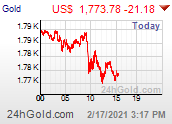
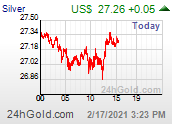 live STI 
|
| Useful To Me Not Useful To Me | |
|
|
|
|
bsiong
Supreme |
01-Feb-2012 08:16
Yells: "The Greatest Wealth is Health" |
|
x 0
x 0 Alert Admin |
 Gold, Silver Winning 2012 Asset Return Race With 11 Months Leftfor January, Silver is the clear winner in the global asset return race (at almost a 20% gain) with Gold in 2nd place at around +11.2%. Read More |
| Useful To Me Not Useful To Me | |
|
bsiong
Supreme |
01-Feb-2012 08:15
Yells: "The Greatest Wealth is Health" |
|
x 0
x 0 Alert Admin |
 Leeb - Silver To Break $100 This Year & Gold Bull On The Move“The implications are that gold, if you look at the 70s, could easily go up eight fold from here. That’s where you get your targets in excess of $10,... Read More |
| Useful To Me Not Useful To Me | |
|
bsiong
Supreme |
01-Feb-2012 08:13
Yells: "The Greatest Wealth is Health" |
|
x 0
x 0 Alert Admin |
Last Updated : 01 February 2012 at 02:05 IST 'Silver may be poised for solid gains in 2012'\LONDON (Commodity Online): Silver may be poised for solid gains in 2012 after a poor showing in 2011 and strong demand for the metal, said optionsXpress in a research note. “Technically, the (Comex) March Silver contract has made significant progress, but prices need to sustain rallies above $35 to keep the rally going,” optionsXpress added. Silver has been one of the strongest commodities during January. “Oversold conditions and increased demand from industrial users of the metal have contributed to the rebound,” OptionsXpress said. “Investors have also become a bit numb to the financial crisis gripping Europe, and they appear to be less convinced that the worst-case scenario is a real possibility. Silver has also ridden the coattails of the Gold market, which has performed well as an inflation play. Silver traders also got a boost from the FOMC, which forecast interest rates to remain at extremely low levels for the next 2-3 years, stoking some inflation fears,” OptionsXpress said. |
| Useful To Me Not Useful To Me | |
|
|
|
|
bsiong
Supreme |
01-Feb-2012 08:12
Yells: "The Greatest Wealth is Health" |
|
x 0
x 0 Alert Admin |
January 31, 2012 |
| Useful To Me Not Useful To Me | |
|
bsiong
Supreme |
01-Feb-2012 00:35
Yells: "The Greatest Wealth is Health" |
|
x 0
x 0 Alert Admin |
Last Updated : 31 January 2012 at 21:05 IST Gold stocks poised to repeat the massive Great Depression rallyBy Hubert Moolman It was no coincidence that gold stocks performed as well as they did. Like all goods, gold stocks will thrive under the ideal conditions. During the Great Depression, those ideal conditions were present. The purpose of this editorial is to look at what those conditions were, and identify a pattern that was present before and during those rallies. If we are able to identify those circumstances and pattern, we could look to see if they are present today, or in the future, in order to know when to expect a massive gold stocks rally. – end of extract. I then go on to identify those ideal circumstances and patterns that were present before and during the great gold stocks rally. The conditions today are very similar to then, and is an ideal set-up for a most spectacular gold stocks rally over the coming months. Here, I would like to illustrate, by way of a chart, how the conditions were similar. The gold stock rally of the 1930s coincided with major economic decline, as well as a significant increase in the real price of gold. Below, is a chart (from planbeconomics.com) of the long-term Gold/Oil ratio:
On the chart I have highlighted a peculiar pattern that exists just before the gold stocks rallies of the Great Depression and the early 70s. The pattern is basically: The peak in the stock market (DOW) and Dow/Gold ratio – point p Gold rallies significantly from about after 1 – point g After a significant bottom in the Gold/Oil ratio and after that ratio has been rising for quite some time. Note that the yellow lines in the chart represent the point where the Gold stocks really took off (broke out) Currently, conditions are setting up in a similar manner to the Great Depression and the early 70s. We have a significant bottom in the long-term Gold/Oil ratio, we have had a peak of the Dow and the Dow/Gold ratio (in 1999) and we have had a gold rally that started after 1999, and is about to accelerate. We are also at a point where major economic decline can be expected (see my previous video), similar to the decline during the Great Depression. So, it appears that we have conditions that are ideal for gold stocks to finally take the Lead in this bull market. Do the charts for these gold stocks agree? Below, is a chart of the HUI:
The HUI appears to have bottomed, and is currently embarking on a massive rally. The yellow line should be good support, should price fall back again. Buying close to the yellow line would also be a good long-term entry point. Please note that the green drawn line is just for illustration purpose, it is not meant to show exactly how the chart will play-out. A scenario for the HUI, which is very likely, is that the HUI follows the example of silver’s rally from the $19 level to $49. I think this is very likely, since it seems that the HUI is now in a very similar situation to where Silver was in August 2010. |
| Useful To Me Not Useful To Me | |
|
bsiong
Supreme |
31-Jan-2012 23:29
Yells: "The Greatest Wealth is Health" |
|
x 0
x 0 Alert Admin |
January 31, 2012 |
| Useful To Me Not Useful To Me | |
|
bsiong
Supreme |
31-Jan-2012 21:11
Yells: "The Greatest Wealth is Health" |
|
x 0
x 0 Alert Admin |
Last Updated : 31 January 2012 at 17:05 IST
Gold: US Fed sets the groundwork for higher prices, spotlight on GreeceNEW YORK: Gold saw its fourth consecutive weekly rise last week, with YTD returns matching growth over the whole of 2011 at around 9%. Federal Reserve interest rate projections hinting that official interest rates could remain rock-bottom into 2014 was the chief catalyst, tempting investors out of cash after 2011’s end of year deleveraging. Fed chairman Ben Bernanke also hinted that if the Fed’s expectations of anaemic recovery in the US jobs market comes to pass, the Fed will likely look at ways to ramp-up monetary stimulus. Negative real interest rates have been a key support factor for gold in recent years  Precious metals positioning and technicals becoming more supportive. Net speculative futures positioning in silver, the hardest hit in the Q4 speculative long position clear-out, saw its fourth consecutive weekly build in net long positions last week, with net speculative futures positions in other precious metals also continuing to rise after hitting their lowest levels in at least 2 years by the end of 2011. Technicals are also becoming more supportive with Gold holding above its 200 day moving average and other precious metals also moving back to their 200 day trend lines Greek debt deal and global Lead indicators likely to be main market drivers this week. This week investor focus will likely be on the EU Summit in Brussels, Greek debt negotiations and key purchasing manager and labour indicators including the US manufacturing ISM, payrolls, China, UK and EU PMIs. Growth and a controlled write-off of Greek (and probably Portuguese) debt remain critical to maintaining the commodity and cyclical asset rally so far this year. Source: Etfsecurities Precious Metals Weekly report |
| Useful To Me Not Useful To Me | |
|
|
|
|
bsiong
Supreme |
31-Jan-2012 20:54
Yells: "The Greatest Wealth is Health" |
|
x 0
x 0 Alert Admin |
Gold back in vogue, posts biggest gain since Aug * Gold's rise could top 11 percent this month * Jan gains leave 2011 volatility in the shade * Low rate environment a key support $1,800 next hurdle * Coming Up: U.S. consumer confidence Jan 1500 GMT By Veronica Brown LONDON, Jan 31 (Reuters) - Gold prices rose on Tuesday on a weaker dollar and were on course for their biggest monthly rise since August, raising the possibility of a climb toward last year's record high of just over $1,900 per ounce. Sentiment for gold at the end of January compares starkly with late December, when prices dropped by more than 10 percent in their biggest monthly fall since the collapse of Lehman Brothers in an investor dash for cash. A $400 price drop from last September's record $1,920.30 had left investors questioning whether gold had ended an 11-year rally. Gold was up 0.6 percent at $1,740.80 an ounce by 1143 GMT, having earlier touched $1,744.80 - its highest since mid-December and up some 11.2 percent on the month to date. The euro rose against the dollar on hopes for a Greek debt restructuring deal that would help the country avoid a disorderly default, possibly setting itself up for a test of a key chart level. A weaker dollar makes gold cheaper for holders of other currencies. While recovering global share prices and hope of a deal for Greece tempered gold's safe-haven gloss on Tuesday, concerns about Portugal following a similar path to Greece and data pointing to a poor first quarter in the euro zone kept the background environment supportive. More broadly, bullion was benefitting from a favourable monetary policy backdrop, with a jump of almost 5 percent last week after the U.S. Federal Reserve pledged to keep interest rates near zero until at least late 2014. " Interest rates remain low, euro zone problems persist, the situation in Portugal got worse yesterday ... and now that we broke through $1,740 it looks like prices might go up," said Alexander Zumpfe, a precious metals trader at Heraeus in Germany. A top U.S. Federal Reserve official said on Monday he would have preferred a more optimistic statement on the U.S. economy, after the central bank painted a grim picture of the recovery last week and forecast ultra-low interest rates. " With gold starting 2012 at a cracking pace ... gold may be poised to set fresh highs this year but much earlier than many - ourselves included - would have expected." Ross Norman, chief executive of Sharps Pixley, said in a note. PORTUGAL YIELDS BREACH 17 PERCENT Portugal's 10-year government bond yields fell sharply on the day but remained in sight of 17.0 percent, close to euro-era highs of around 17.4 percent, stoking the fears that Lisbon may become the next Athens. " Sentiment seems to have improved quite tremendously, I would say. We are now into more bullish territory, more than ever, with the Fed providing enough fundamental support," said Dominic Schnider, head of commodity research at UBS Wealth Management. " I think we have good reasons to believe we are going to test $1,805. The Fed was clearly the most important event," he added. Gold has gained for the last four weeks, with a spike in prices before the Lunar New Year holidays being driven partly by Chinese buying. " Before the Chinese New Year really started, we've seen quite strong gold exports from Hong Kong to China. Apparently Chinese demand was very solid," said Schnider. The most active U.S. April gold contract rose $7.80 an ounce to $1,742.30 an ounce. Greece and its private creditors realise the need for it to avert a financial collapse and are close to a deal on restructuring Greek sovereign debt, Luxembourg Finance Minister Luc Frieden said on Tuesday. Silver added 0.9 percent to trade at $33.77 an ounce after rising to $33.95 on Monday, its strongest since mid-November. Platinum and palladium also firmed. Holdings of the world's largest silver-backed exchange-traded fund, iShares Silver Trust rose about 1 percent to 9,608.95 tonnes by Monday, from 9,510.70 tonnes on Friday. Traders and investors were also watching for further developments at South African miner Impala Platinum. It said on Monday its Rustenburg operations remained shut after the majority of workers staging an illegal strike over wages failed to return to work. (Additional reporting by Lewa Pardomuan in SINGAPORE Editing by Jane Baird) |
| Useful To Me Not Useful To Me | |
|
bsiong
Supreme |
31-Jan-2012 09:29
Yells: "The Greatest Wealth is Health" |
|
x 0
x 0 Alert Admin |
 Harvey Organ's Daily Gold & Silver ReportMFGlobal and our vaporizing 1.2 billion dollars/Greece and Portugal/Gold and silver raid prior to first day notice Read More |
| Useful To Me Not Useful To Me | |
|
bsiong
Supreme |
31-Jan-2012 09:28
Yells: "The Greatest Wealth is Health" |
|
x 0
x 0 Alert Admin |
 TF Metals Report: Didn't Miss MuchUntil then, let's see if silver can break UP and out of this current range. If it does, it will likely head to 35-35.50 pretty quickly. Read More |
| Useful To Me Not Useful To Me | |
|
bsiong
Supreme |
31-Jan-2012 09:26
Yells: "The Greatest Wealth is Health" |
|
x 0
x 0 Alert Admin |
 Turk - Gold Ready To Smash Through $2,000, Exploding HigherThis following weekly silver chart is really looking very powerful & as I have been saying, once silver hurdles above $35, I expect to see $68-$70 in ... Read More |
| Useful To Me Not Useful To Me | |
|
bsiong
Supreme |
31-Jan-2012 09:21
Yells: "The Greatest Wealth is Health" |
|
x 0
x 0 Alert Admin |
Gold steady heads for biggest monthly gain since AugSINGAPORE, Jan 31 (Reuters) - Gold steadied on Tuesday, after falling in the previous session on a weaker euro, while prices were on track for their biggest monthly increase since August. FUNDAMENTALS * Spot gold added $1.05 an ounce to $1,729.69 an ounce by 0030 GMT, having hit an intraday low around $1,716 on Monday. Gold struck a record at $1,920.30 last September. * Prices were headed for a more than 10 percent rise this month, highest since a 12 percent gain in August 2011. * Gold rose about 5 percent last week, its fourth consecutive weekly gain, after the U.S. Federal Reserve said it was unlikely to raise interest rates from near zero until at least late 2014, which could put pressure on the dollar. * Chancellor Angela Merkel cemented her political ascendancy in Europe on Monday when 25 out of 27 EU states agreed to a German-inspired pact for stricter budget discipline, even as they struggled to rekindle growth from the ashes of austerity. But differences over the limits of austerity, and Greece's unfinished debt restructuring negotiations, hampered efforts to convey a more optimistic message that Europe is getting on top of its debt crisis. * U.S. February gold was steady at $1,731.50 an ounce. MARKET NEWS * The dollar floundered around three-month lows versus the yen in Asia on Tuesday and was near enough to record depths to make markets wary of intervention, while the euro nursed losses as Greece's debt swap deal proved elusive. * Japan's Nikkei share average dipped in early trade on Tuesday, down for the fourth straight session, as Canon Inc and Fujiflim Holdings fell after their earnings results, though Sumitomo Mitsui Financial Group gained. * U.S. crude oil rose above $99 a barrel on Tuesday on concerns over supply disruptions in South Sudan and OPEC member Iran. DATA/EVENTS 0500 Japan Construction orders yy Dec 2011 0700 Germany Retail sales yy real Dec 2011 1100 Brazil Industrial output yy Dec 2011 1245 U.S. ICSC chain stores yy Weekly 1445 U.S. Chicago PMI Jan 1500 U.S. Consumer confidence Jan |
| Useful To Me Not Useful To Me | |
|
bsiong
Supreme |
31-Jan-2012 09:17
Yells: "The Greatest Wealth is Health" |
|
x 0
x 0 Alert Admin |
Gold eases, stays in sight of 7-week highs* Gold slides as euro drops correlation with stocks erodes * Investors snap up metal via futures, ETFs * Platinum specs raise holdings to four-month highs -CFTC LONDON, Jan 30 (Reuters) - Gold eased on Monday, under pressure from a weaker euro, but was off session lows and still within sight of last week's seven-week highs, supported by evidence of improved investor demand. The euro slid by 1 percent from six-week highs against the dollar, while U.S. shares fell in early trade on the back of concern about the lack of progress in negotiations over a Greek debt swap, which also pushed up the risk premium on European government bonds. European leaders struggled to reconcile austerity with growth on Monday at a summit due to approve a permanent rescue fund for theeuro zone and put finishing touches to a German-driven pact for stricter budget discipline. Last week, the gold price staged its largest weekly rally in three months to reach a high of $1,739 an ounce after the Federal Reserve signalled it expected no change to near-zero U.S. interest rates for nearly three years and data showed the U.S. economy grew more slowly than expected in the final quarter of 2011. Spot gold was down 0.5 percent at $1,728.75 an ounce at 1535 GMT but up from the intraday low at $1,716.19 and also set for a 10 percent gain in January, its strongest monthly rise since August's 12 percent rally. Analysts said they expected gold to recover from Monday's bout of weakness, especially given the impasse over the restructuring of Greece's debt burden. " Until we until we get some kind of resolution in these discussions on Greek debt and what the bondholders are going to accept as a haircut, then that is still going to be a live issue for the market," Credit Suisse analyst Tom Kendall said. " If the perception of risk related to that increases, then you'll probably see an acceleration of the flow of cash out of peripheral European countries and some of that will undoubtedly make its way into gold," he said. Reflecting investors' improved appetite for gold relative to the end of 2011, data on Friday from the Commodity Futures Trading Commission showed speculators in U.S. gold futures raised their holdings for a third week in a row, marking the longest stretch of increases in the net non-commercial position on COMEX in six months. Also, holdings of metal in exchange-traded funds backed by physical gold, often used by analysts as a gauge of more immediate switches in investor demand, rose by nearly 200,000 ounces last week to 69.324 million ounces, their highest since late December, following inflows of metal into the SPDR Gold Trust, the world's largest gold ETF, as well as into the ETF Securities' Swiss gold fund.
EURO WEIGHT Dragging on gold was the decline in the euro against the dollar from six-week highs after investors took profits made on its strongest weekly rally in more than a quarter and awaited news of a deal on Greece's debt. Prime Minister Lucas Papademos sought backing on Sunday from Greek party leaders for painful and unpopular reforms. Gold's correlation with the equity market has fallen in the last week to its least positive in three months, while that with the euro has held steady in positive territory, indicating the likelihood that the bullion price will move in tandem with the single European currency. UBS analyst Edel Tully noted the erosion in gold's direct relationship with the equity market. " Does this mean that gold has finally broken its ties with risk? One day clearly doesn't make a trend, and the sluggishness in equities ahead of the weekend was likely in part driven by profit-taking rather than a risk-off turn, especially given easing peripheral bond yields," she wrote. " Nevertheless, it is certainly an encouraging development and does increase the possibility that there is more to gold's rally. It may well be a clue that investors have shifted gears and are now starting to put more conviction behind their bullish gold outlook," she said. Gold priced in euros was down 0.4 percent on the day just below 1,310 euros an ounce, having hit a 2-1/2 month high at 1,318.19 euros last week. In other precious metals, platinum and palladium fell under pressure from the dollar's strength and from more modest risk appetite. Supply disruptions in top platinum producer South Africa last week and the potential for electricity shortages in the country has put the platinum price on track for its biggest monthly gain in almost four years. The platinum price, down 0.6 percent on the day at $1,605.74 an ounce, has risen by nearly 15 percent in January, the largest rise since the 25 percent increase in February 2008. The rising price resulted in a sharp pick-up in investor demand for both platinum and palladium last week. The CFTC data showed speculators brought their holdings of U.S. platinum holdings to their highest level since September. Palladium was quoted down 0.4 percent on the day at $683.00 an ounce, while silver fell 1.5 percent to $33.43 an ounce. (Additional reporting by Lewa Pardomuan in SINGAPORE Editing by Anthony Barker) |
| Useful To Me Not Useful To Me | |
|
bsiong
Supreme |
31-Jan-2012 09:14
Yells: "The Greatest Wealth is Health" |
|
x 0
x 0 Alert Admin |
January 30, 2012 |
| Useful To Me Not Useful To Me | |
|
bsiong
Supreme |
30-Jan-2012 23:46
Yells: "The Greatest Wealth is Health" |
|
x 0
x 0 Alert Admin |
Last Updated : 30 January 2012 at 21:05 IST Silver and Gold will win the currency warsBy Greg Canavan 'To support a stronger economic recovery and to help ensure that inflation, over time, is at levels consistent with the dual mandate, the Committee expects to maintain a highly accommodative stance for monetary policy. In particular, the Committee decided today to keep the target range for the federal funds rate at 0 to 1/4 percent and currently anticipates that economic conditions – including low rates of resource utilization and a subdued outlook for inflation over the medium run – are likely to warrant exceptionally low levels for the federal funds rate at least through late 2014.' The Fed also promised to keep buying longer-term treasury securities with the proceeds from the maturing shorter-term securities in its portfolio. That, along with weaker economic growth forecasts, saw long-term bond yields fall. And when yields fall, prices rise – so bond market investors were happy. While Bernanke didn't announce QE3, he said it remains an option. Interest rates aren't going anywhere for another couple of years. The stock market loved it. So the Fed's announcement contained something for everyone – the bond AND stock market investor. Sweet. We'll explain why, despite the initial reaction, you shouldn't get too excited about stocks in a moment. But the big picture issue to contemplate here is that the Fed has just fired another salvo in the global currency war. Over the past few months, the Fed has taken a back seat to the European Central Bank (ECB). The sovereign debt crisis engulfing the region has revealed the ECB to be a formidable opponent to the Fed when it comes to money printing. Of course, the ECB says it's simply providing 'liquidity', but everyone knows that's just another euphemism (the list grows by the day) for printing money. The ECB's actions have resulted in the Euro weakening against the Dollar, exactly as planned. A weaker Euro allows Eurozone nations to become more competitive in international markets. Despite Germany's apparent distaste for easy money and a weaker currency, its powerhouse export sector is perhaps the biggest beneficiary of the ECB's actions. While the Euro is not yet weak enough versus the US Dollar to cause genuine concern, the ECB's newfound monetary vigor is raising eyebrows. Bernanke's promise of low interest rates for years to come and the threat of more QE was a less than subtle reminder that a weak US Dollar is a long term Fed objective. It's also an objective of the ECB, the Bank of England, the Bank of Japan, and the People's Bank of China. The problem is, they can't all be successful. Well, maybe they can against a little currency like the Aussie Dollar. The Aussie is a major beneficiary – or casualty, depending on your viewpoint – of this ongoing currency war. While all the major trading nations and blocs attempt to keep their currency weak to boost exports, capital flows to Australia as it seeks refuge from the hostilities. The Aussie is again in the headlines as it surges higher against a range of (formally) powerful currencies. This currency strength should provide the RBA with cover to reduce interest rates at its next meeting in early February. Up until now the RBA has refrained from getting involved in the currency wars. It sees a strong Dollar as a tool to contain inflation. But China's economy is coming off the boil, easing the inflationary threat to Australia. Such a strong Dollar, at a time of rising unemployment and moderating inflation, might not be such a welcome tool. So expect the RBA to join the fight this year. While they won't say so explicitly, we're betting interest rates fall to record lows in an attempt to counter the easy money policies of the world's major economies. Everyone loses in war. In this unfolding currency war, no fiat currency can win. Currency devaluation is a crude method of stealing demand for goods and services off someone else. It doesn't create new demand or wealth. It's a zero sum game. But it does Lead to increasing levels of distrust and economic animosity. As a result, Gold and Silver (and maybe foreign exchange brokers as the world turns into a casino) will be the only victors. That's why both metals soared on the news of Bernanke's announcement. And don't expect to be protected by the stock market either. If these currency wars eventually lead to high inflation, as is expected, the stock market might not be the wealth preserver (in times of inflation) it's made out to be. The last time we experienced high inflation globally was in the 1970s. It was a terrible decade for investors. Inflation in goods and services might mean higher prices but the other side of that coin is high costs – both operating and capital costs. It also means higher market interest rates. In a world with too much debt, the last thing we need is higher rates (or falling bond prices) in the US or Japan. But the way this currency war is unfolding, that's where we are headed. |
| Useful To Me Not Useful To Me | |

